 Italiano
 English
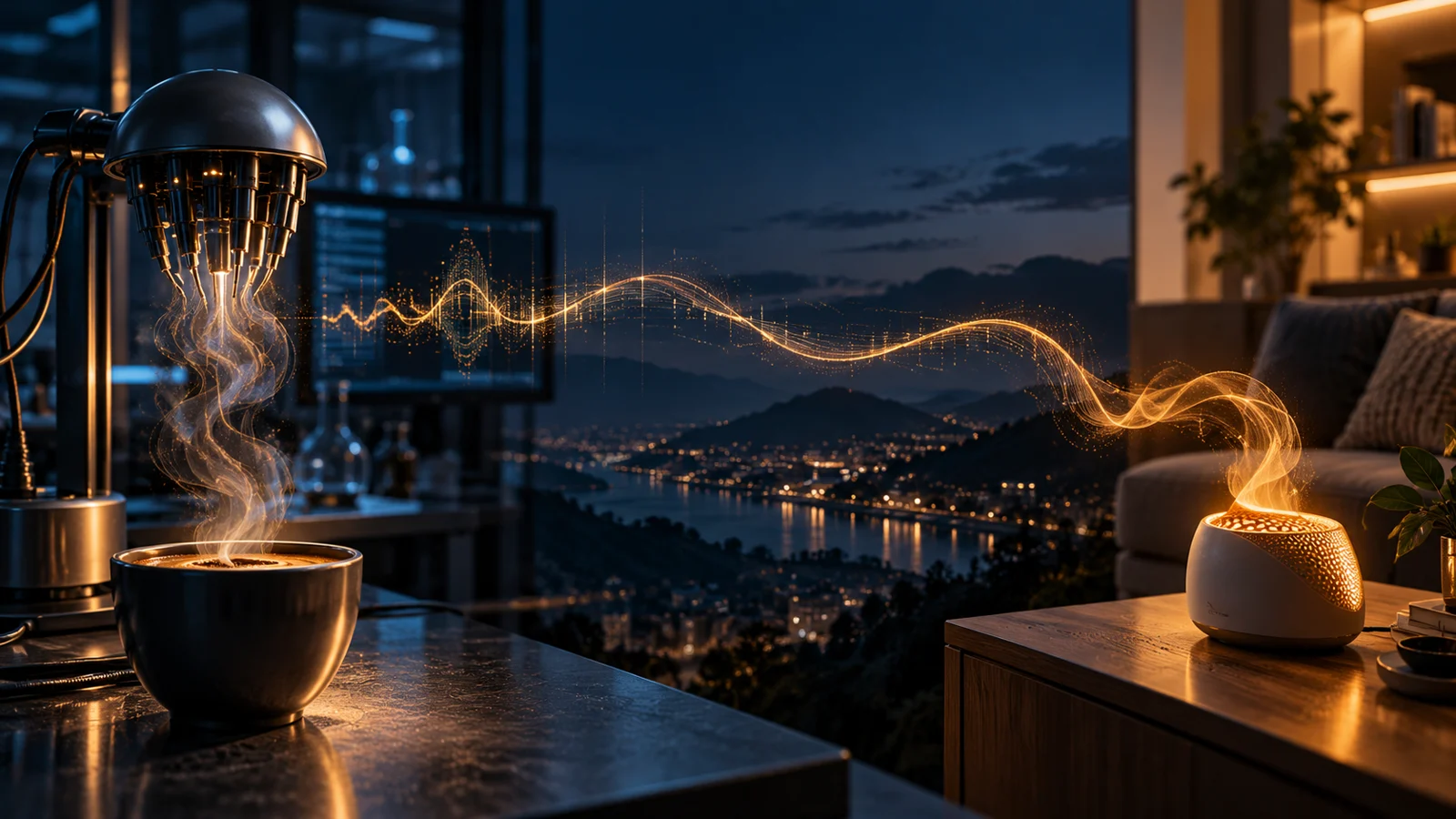
The point: information travels, not the scent
A team at Ohio State University built Scentronic, a system that recognizes a smell in one place and attempts to recreate it elsewhere. An electronic nose analyzes the air; a machine-learning model assigns the sample to a category; an online platform sends that result to a remote diffuser. The receiving device releases a mixture already available in its cartridges. Coffee molecules do not cross the internet: information travels, telling the second device which formulation to activate.
The distinction prevents the prototype from being mistaken for matter teleportation. Scentronic demonstrated five categories: beer, cake, coffee, oranges and red wine. It is a tiny vocabulary compared with smells found in a kitchen, on a street or on a person. Yet it makes a question often confined to experiments concrete: can smell be added to remote communication with components small enough for a desk or the body?
According to Reuters, the electronic nose measures about fifteen centimeters. The team built generators worn on the wrist or neck, as well as a handheld version. These are form-factor experiments, not products announced for sale. The research demonstrates the full chain from detection to reproduction, but does not yet show that the system can handle the confused, changing and blended smells of everyday life.
How a smell becomes a category
The first step does not identify a substance as a fully equipped chemistry laboratory would. An array of sensors reacts to compounds in the air and produces a signal fingerprint. The model compares that fingerprint with training examples and chooses among known categories. If the sample resembles the coffee learned by the system, the message sent does not contain a molecular formula: it contains the classification result.
The destination therefore needs a physical library. The generator stores formulations associated with the categories and releases them when it receives a command. This synchronizes an experience without shipping a sample, but moves the problem into the cartridge. Every new aroma requires a prepared, storable mixture compatible with the device. If the local formulation differs from the original, the recipient gets an approximation even when recognition is correct.
Recognition and reproduction are two distinct tasks. The first depends on sensors, data and the model; the second on real substances, doses, timing and environmental conditions. Temperature, humidity, distance from the nose and individual habituation can change perception. The research links the two tasks in one interface, but does not erase these differences: it makes them visible in the same experiment.
Five scents do not yet make a language
A trial with five categories is enough to test the principle, not to represent an environment. A freshly cut orange changes over time; coffee combines roast, temperature and varying notes; a room blends food, materials and people. A classifier forced to choose among five labels may appear confident precisely because it is not asked to describe what it does not know.
To scale, the system would need to recognize many more categories, reject samples outside its vocabulary and handle mixtures in which no smell dominates. It would also need to distinguish intensity and quality instead of sending only a name. Reproduction would require refillable, stable cartridges in sufficient numbers to combine different results without turning the device into a warehouse of essences.
Then there is safety. A wearable device releases substances close to the face or skin. Before extended use, data are needed on concentrations, repeated exposure, allergies, cross-contamination between cartridges and cleaning. The sources describe possible applications and barriers to commercialization, but they do not provide certification for everyday use. Miniaturization alone does not make a diffuser ready for the public.
What would change for the user
The researchers envision more sensory video calls, virtual reality, online shopping and shared moments at a distance. A family might pair a smell with a conversation; a shop might let people sample a fragrance; a virtual environment might add smoke, woodland or food. These are proposed scenarios, not observed users or measured benefits.
If these systems reached the market, they would introduce choices rarely found in today's interfaces. Who decides which smells are available? How is cartridge composition disclosed? Can the recipient block a category before release? An unwanted image stays on a screen; a substance dispersed in the air enters physical space. Consent, labeling and local control should be parts of the interface, not notes added afterward.
The technology could also infer information from what it smells. A sensor able to classify its surroundings could identify food, smoke or other presences. Scentronic is not presented as a surveillance tool, but a future connected product should limit which data it stores and shares. Bringing a new sense online also creates a new kind of personal data.
The decisive test is fidelity, not surprise
The next useful step is not another spectacular demonstration. It is measuring whether different people recognize the recreated smell, how similar they judge it to the original and how the result changes after many activations. Tests are needed with unknown mixtures, disclosed errors, depleted cartridges and real environments. Cost, lifespan, maintenance and the range of available substances will matter more than sending a command over the network alone.
A phone accessory is possible only if sensors and generators become small, inexpensive and easy to refill. Integration remains difficult because a phone handles data, whereas this system must hold materials that age, mix and contact the air people breathe. The research has built a bridge between these worlds; it has not yet solved the logistics of the material side.
Scentronic is interesting precisely because it reveals the limit instead of hiding it. The internet can transmit the recognition of coffee almost instantly. To make someone smell it elsewhere, a suitable substance must already be there, be dosed, and have its fidelity and safety demonstrated. Digital scent will depend not only on how well machines smell, but on how responsibly we store and release what cannot become a bit.