 Italiano
 English
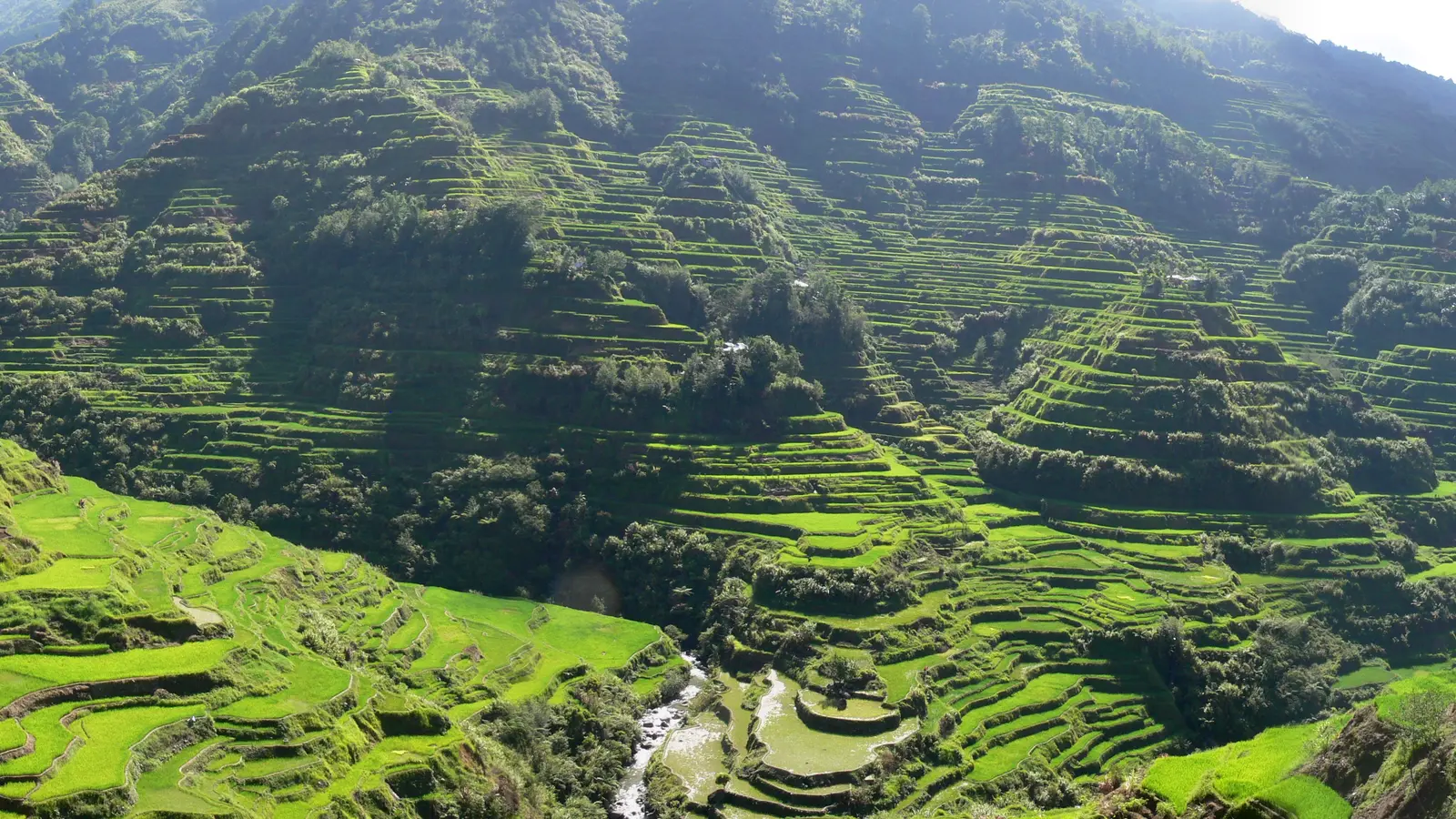
The second product hidden in the rice field
A rice field can produce grain, but also a measurable climate service. That is the economic thesis behind the agreement announced on 16 September 2026 by Google and Terradot. According to Reuters, the project will cover more than 200,000 hectares in Rio Grande do Sul and aims to generate two separate outcomes: one million tonnes of credits for avoided methane by 2030 and one million tonnes of carbon-dioxide removal by 2040. The price was not disclosed. The volumes and deadlines are therefore targets stated by the companies, not tonnes already certified.
The innovation is not only technical. It is the idea of using the same agricultural infrastructure to serve two climate markets with different timelines. Avoided methane has a relatively rapid effect; powdered rock reacting in the soil instead aims to store carbon in durable forms. If verification holds up, the field will not sell one undifferentiated credit, but two separately accounted services. For a farmer, that could mean a new revenue stream or services financed by an industrial buyer. For the buyer, it means building a portfolio that does not confuse reducing an emission with removing CO₂ already in the atmosphere.
The distinction is essential. Preventing a tonne from being emitted is not the same as extracting one already accumulated. Reuters reports that Google presents the transaction as its largest carbon-removal deal and as a replicable model. But the project combines methane reduction with removal: its industrial value will depend on keeping the measurement, price, risk and delivery date of the two products separate.
A tap for methane
Traditionally flooded rice fields create oxygen-poor soil conditions favourable to methane-producing microorganisms. UNEP attributes about 8 percent of human-caused methane emissions to flooded rice cultivation. The practice known as alternate wetting and drying interrupts flooding for controlled periods: the water level is allowed to fall and is then restored. UNEP says this management can halve emissions without reducing yields and cut water use by about one third. These are general figures reported by the organisation, not a certified forecast for the project’s Brazilian land.
This reveals the first paying customer. The technology company is not buying rice: it is funding an operational change spread across thousands of farms and purchasing the climate outcome after it has been measured. Agronomic assistance, irrigation management, data collection and controls are required. The business is therefore not a single machine but an execution network. Whoever coordinates farmers must make a change worthwhile even though it may alter habits, schedules and production risks. If climate payments arrived late or were absorbed by verification costs, adoption could stall even with a sound technique.
A potential water benefit makes the model more attractive, especially where water is expensive or unreliable. It cannot, however, be assumed: drainage, soil type, crop variety and irrigation infrastructure differ from farm to farm. The economic hypothesis is that payment for avoided methane covers training and measurement while leaving part of the value with the producer. The agreement’s terms do not yet reveal how that margin will be shared.
Rock dust that works slowly
The second product comes from enhanced rock weathering. Terradot spreads crushed basalt on acidic farmland: as it reacts with water and CO₂, some minerals turn carbon into bicarbonates that travel through runoff towards long-term storage in the ocean. It is an accelerated version of a natural process. Frontier Climate, which signed a 2024 agreement with Terradot for 89,998 tonnes, lists 167.2 tonnes delivered on the portfolio page consulted. That gap does not prove failure; it shows how early delivery remains compared with contracted volumes.
Basalt is not a magic wand. It must be mined or recovered, ground, transported and spread; every step consumes energy and must be included in the net balance. Reaction speed depends on particle size, climate, soil chemistry and water. A chemical change observed in the field must also be converted into tonnes of CO₂ removed with a stated uncertainty. Experimental research published as a preprint in 2023 showed that a soil mass-balance method can estimate weathering, but it described a controlled sorghum trial and did not certify the Brazilian project. It illustrates the measurement problem, not a commercial guarantee.
The competitive frontier therefore shifts from simple access to rock to data quality. Sampling, tracers, models, laboratories and independent verifiers can become a significant part of the cost. Reuters reports Terradot’s statement that verification can add more than $100 per tonne; the company plans to verify less frequently by allowing more removal to accumulate before inspection. It is an understandable economic choice, but it lengthens the interval between field activity and revenue recognition.
The margin lies in proof, not promises
Terradot’s previous 2024 agreement, worth $27 million for about 90,000 tonnes, implies an order of magnitude close to $300 per tonne. Reuters reports that the new contract would be cheaper, but still above the $100-per-tonne level many operators regard as a threshold for broadening demand. Frontier says it seeks technologies with a credible path below that level, storage lasting more than a thousand years, independent verification and significant potential capacity. These are Frontier’s purchasing criteria, not a universal standard or certification of every project.
This creates an adjacent market more interesting than selling credits alone: cheaper measurement tools, software linking plots and samples, rock logistics, insurance against non-delivery, and contracts that distribute risk. A local operator may lack the scale to sell directly to a multinational, but could supply one of these services. The realistic entrepreneurial idea is not to imitate Terradot tomorrow; it is to identify the bottleneck that becomes more expensive as projects move from hundreds to hundreds of thousands of hectares.
Frontier explicitly warns that the sector is young, that some suppliers may be delayed or fail to deliver, and that payments in offtake contracts depend on milestones and verification. Early pre-purchases may instead involve non-refundable risk. This transparency tempers the easy narrative: an announced contract is not a delivered credit, and a delivered credit does not automatically mean a high margin. Value emerges only after subtracting operating costs, energy, measurement, agricultural risk and tied-up capital.
Who can really profit
Farmers are the first link, but not necessarily the one with the greatest bargaining power. They control access to the land and make the operational change; without them there is no credit. On the other side are large buyers willing to fund technologies that are still expensive. Between them sit the developer, laboratories, verifiers, data suppliers and intermediaries. Economic sustainability will depend on how much value remains with the producer after this chain. Without understandable terms and reliable payments, acreage available on paper will not become acreage actually managed.
The second potential winner is whoever owns a suitable nearby source of basalt. Distance can turn a cheap material into a logistical and climate cost. Caution is needed here too: not every quarry dust has the same reactivity or contaminant profile. Material qualification can become a standalone service, along with batch traceability. A third opportunity concerns agronomic data: water sensors, satellite imagery and field records can reduce visits and sampling, but do not automatically replace chemical measurement of removal.
For Italy, direct application is a hypothesis, not a consequence of the Brazilian agreement. Rice fields in Piedmont and Lombardy offer irrigation expertise and concentrated acreage, but have different rules, soils and supply chains. Before discussing credits, local trials would be needed on yields, methane, water use, rock availability and verification methods. A possible Italian business could begin with pilot projects paid to produce data, rather than advance sales of millions of tonnes.
The decisive test comes after the announcement
The Rio Grande do Sul project is interesting because it combines two climate clocks and two accounting systems in the same field. Yet that elegance increases the questions. We will need to know how many farmers join, how yields change, how much water is saved, what emissions logistics creates and how many tonnes pass independent verification. The announced scale is an industrial direction; delivered data will be the result.
If it works, the rice field will become a service platform: food, water management, methane reduction and carbon removal. If proof remains too expensive, the market will continue to rely on a few buyers with large climate budgets. This is what FRONTIERA will watch: not how many credits are promised, but what it costs to produce one verified tonne and what share returns to the people working the land.