 Italiano
 English
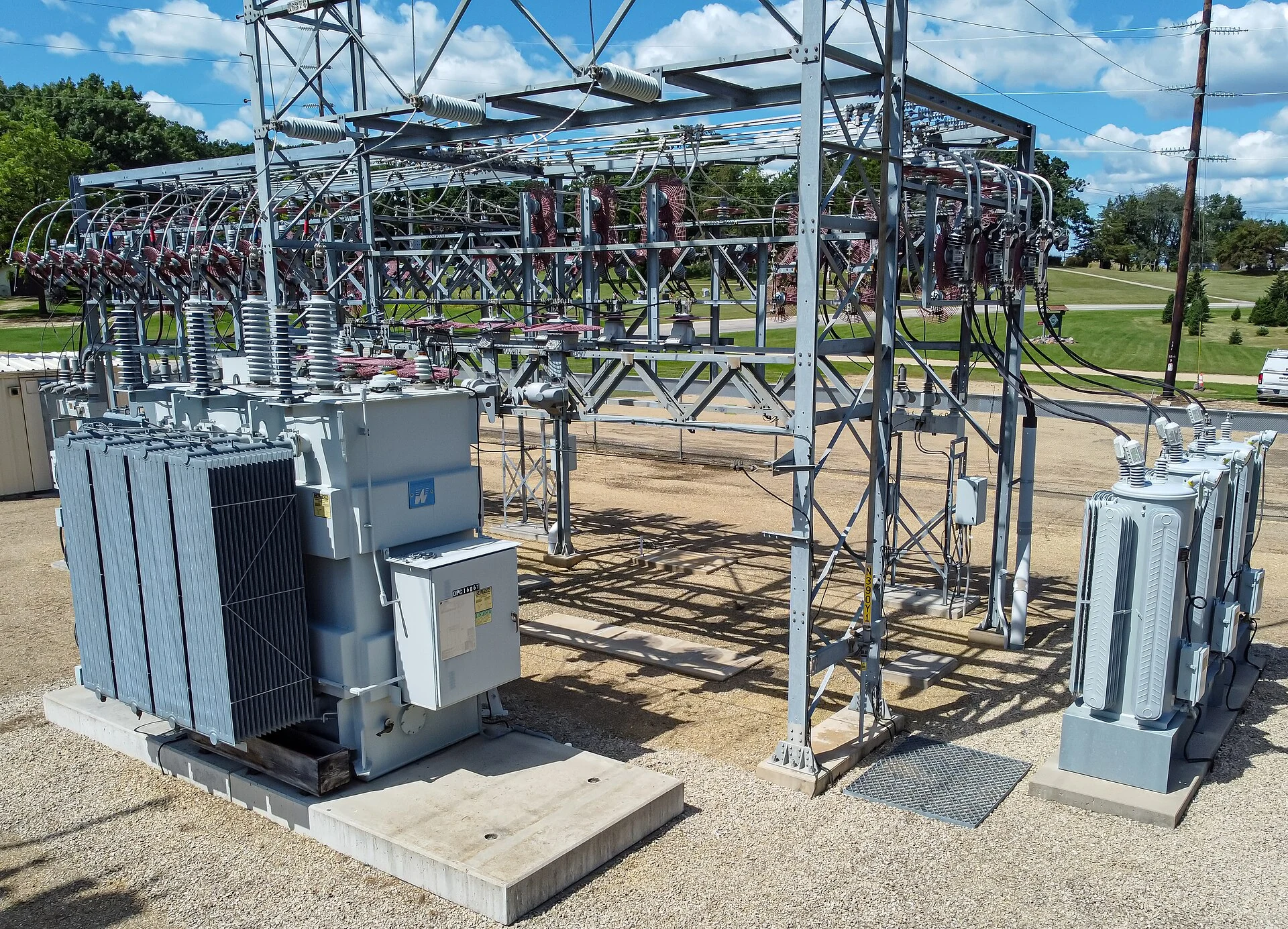
The missing grid component is a bank's promise
A larger power grid begins long before a cable is laid. A grid operator orders transformers, switches and other components; the manufacturer must obtain materials, commit factory capacity and often expand it. Time and money may pass between order and delivery. Meanwhile, the buyer wants assurance that an advance payment is protected and the equipment will arrive as promised. For the supplier, that trust has a specific cost: a bank guarantee that uses part of its financial capacity.
On 29 September 2026, the European Investment Bank (EIB) and BNP Paribas announced an agreement for a guarantee portfolio of up to €700 million for manufacturers of European power-grid components. The EIB will provide up to €350 million in counter-guarantees; BNP Paribas will commit an equivalent amount. Reuters confirmed the main terms of the announcement. This is not €700 million paid to factories today, nor a new power line already built: the agreement creates capacity to guarantee future contracts.
That distinction matters. The EIB and the bank estimate that the mechanism could stimulate up to €2.8 billion of investment in the real economy. This is the sponsors' forecast, not a tally of completed investments. The €700 million ceiling also describes the announced portfolio's maximum size, not guarantees already issued. The interesting story is therefore how a guarantee can turn an order into manufacturing capacity, and what evidence will show whether it actually does so.
Why an order can get stuck at the bank
Imagine, as an example rather than a case documented in the agreement, a company receiving a large order for transformers. The buyer makes an advance payment to allow production to start, but asks for a guarantee that it will be returned if delivery fails. It may also ask for a performance guarantee to cover the risk of the contract not being fulfilled. The issuing bank takes on a potential obligation: if something goes wrong, it may have to pay. It therefore measures its exposure to that manufacturer and may limit the guarantees it provides.
The EIB's published project identifies precisely advance-payment and performance bonds connected with grid-component supply contracts. According to its project summary, rising orders and banks' risk-concentration limits may create a bottleneck for manufacturers. The EIB also notes that relatively few European banks operate in this segment. This is the promoting institution's diagnosis: useful for understanding the design, but not a public measurement of contracts already lost for lack of guarantees.
A counter-guarantee does not itself produce a transformer. It allows the commercial bank to share some of its portfolio risk and, in principle, issue more guarantees to eligible clients. A manufacturer can then bid for larger tenders or accept more orders without exhausting its bank capacity. But the benefit depends on pricing, eligibility, issuance times and whether banks actually use the capacity released. If those steps remain slow or expensive, the production constraint may simply move elsewhere.
A market for those who build the system, not just sell energy
Discussion of the energy transition often focuses on solar panels, turbines and batteries. But more distributed generation needs lines, substations and equipment able to connect plants and consumers. The EIB's project summary presents grid expansion as a condition for integrating new renewable generation and sees the component supply chain as part of the problem. The BNP Paribas agreement targets that supply chain: it supports the contractual risk of firms that manufacture and deliver parts; it does not directly finance every individual power plant or household electricity bill.
FASI, a specialist publisher, explains that the transaction belongs to the EIB's €1.5 billion Pan-EU Power Grid package, backed by InvestEU. This is a financial facility: it should not be confused with permission to build new lines or with the separate EU regulatory package for grids. Reuters places the agreement after the €1 billion wind-energy guarantee portfolio signed by the same parties in February 2025. On 21 September the EIB also announced a separate arrangement with Crédit Agricole CIB for up to €600 million in grid-component guarantees. The new deal is one part of a broader strategy, not the entirety of European funding for the sector.
From a business perspective, the paying client of a bank issuing a guarantee is a company with a contract to perform. Value lies not only in a loan's interest rate but in credibility conveyed to the buyer: a bank commitment may make a supplier acceptable even when its exposure grows rapidly. For a small or medium-sized supply-chain firm, the practical question is whether banks will truly accept contracts and businesses of different sizes. Public documents explain the general structure but do not provide a complete beneficiary list or standard commercial terms for each one.
Four figures that should not be added together
The €350 million figure is the EIB's maximum counter-guarantee commitment in the BNP Paribas agreement. The private bank adds an equivalent amount; together they enable a portfolio of up to €700 million in contract guarantees. The €2.8 billion, by contrast, is the investment the parties expect to mobilise through leverage. Finally, €1.5 billion is the size of the wider EIB grid programme. Adding these figures as four independent allocations would artificially inflate the news. The sources describe them as different levels of the same financial mechanism.
Dates also need care. The EIB project page records the operation as signed in July 2026; the public announcement with BNP Paribas is dated 29 September. There is no reason to present the announcement date as the technical start date of every document. This gap is normal for transactions that pass through approval, signature and public communication, but it reminds us that commercial progress cannot be read from a day's headline.
In 2025, the EIB said, its group invested €33 billion in energy worldwide, including €11.6 billion in grids and storage. This is useful context for judging the institution's priorities, not an outcome of the new agreement. Likewise, the 2025 wind portfolio does not prove this instrument will have the same effect on transformers. Supply chains, delivery times, margins and customer risks differ. Treating a financial analogy as industrial evidence would be a shortcut.
The real test starts when guarantees become orders
Judging the deal's success will require less eye-catching data than the headline amount: how many guarantees are actually issued, for which supplies, to which firms and in which countries; how long issuance takes; what manufacturers pay; and how many additional orders are completed. Without a credible comparison, it will be hard to separate the counter-guarantees' effect from grid demand that might have driven investment anyway. The sources reviewed do not yet provide these results or a list of components already delivered because of the agreement.
There is also a physical limit. A producer with more access to guarantees may still struggle to find skilled workers, steel, copper, testing capacity or an authorised site for expansion. The EIB identifies bank risk capacity as one particular obstacle; it does not say it is the only one. This is the cautious reading of the deal: removing a financial brake may be necessary, but increased production must show up in factories and fulfilled contracts. Permits for lines and grid operators' decisions also remain beyond a bank's control.
The most instructive point for FRONTIERA is that industrial innovation can depend as much on a well-guaranteed contract as on a new machine. If the programme works, Europe will have found a way to use the balance sheets of a public bank and a commercial bank to expand the trust available to the supply chain. If it does not, we will at least have a measurable question: where did the order stall, between the guarantee, the factory and the grid? For now, the fact is a signed agreement; the promise of billions invested remains a promise to verify.