 Italiano
 English
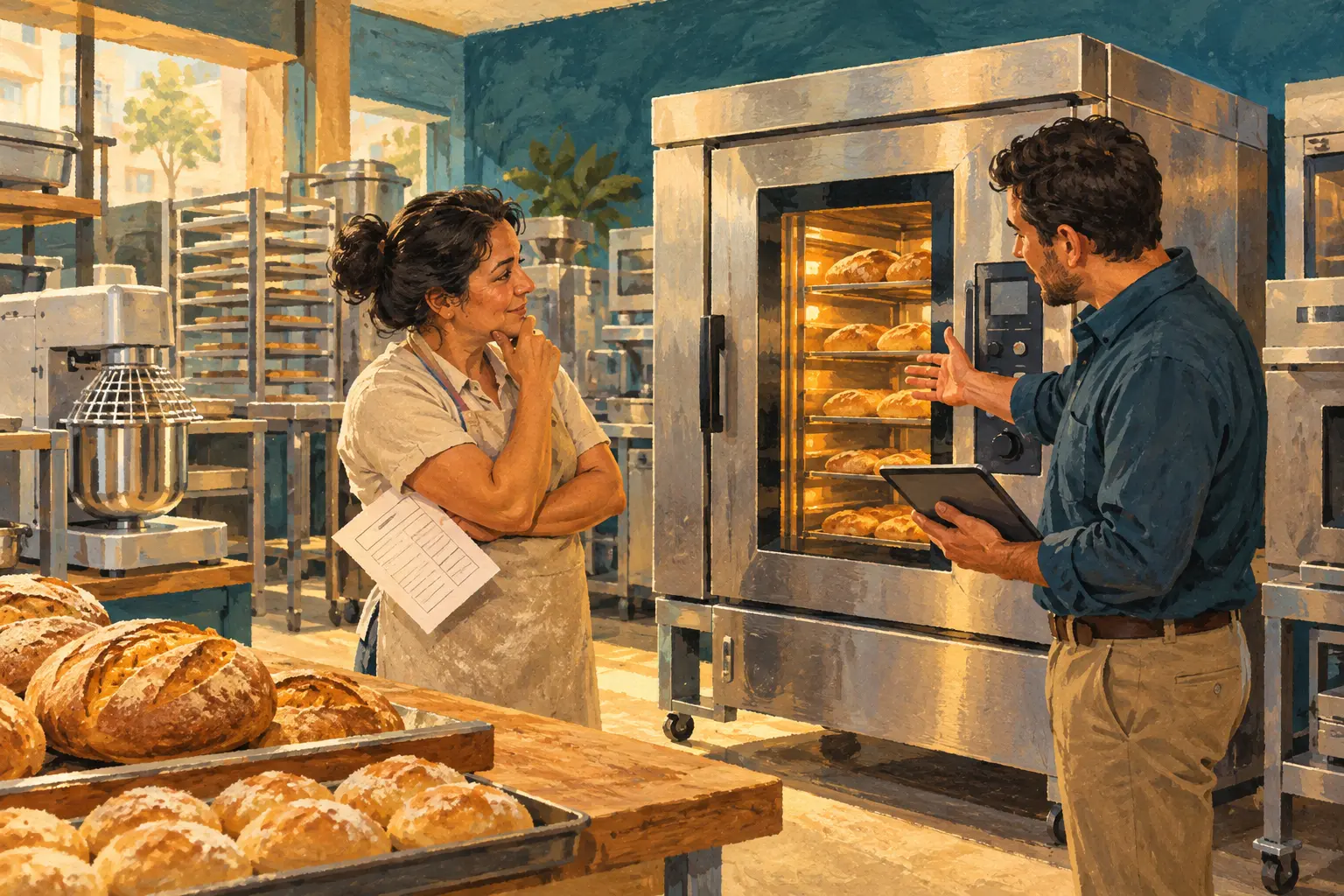
Capital has to reach the oven
You apply for financing in the same place where you choose the machine. That is the model of Colombia’s FinMaq, which on October 27 announced a $6.5 million funding round led by Accion. It works with equipment distributors to reach small businesses that struggle to obtain credit. The problem is concrete: knowing how to use an industrial oven, a professional printer or construction equipment does not mean having the money to buy it.
The customers mentioned in the sources include food producers, clinics, transport operators and smallholder farmers. This is not a story about a newly invented machine. The change concerns the route to acquiring one: financing is offered when the entrepreneur meets the seller, rather than leaving them to find a lender separately.
Mundi Ventures and existing investors ALIVE Ventures and 30N Ventures are also participating in the round. This money goes into the company that arranges financing. It is not $6.5 million automatically distributed to customers, nor revenue generated by the machines. Distinguishing these figures helps explain where the project begins and where its effects still have to appear.
Three parties, one purchase
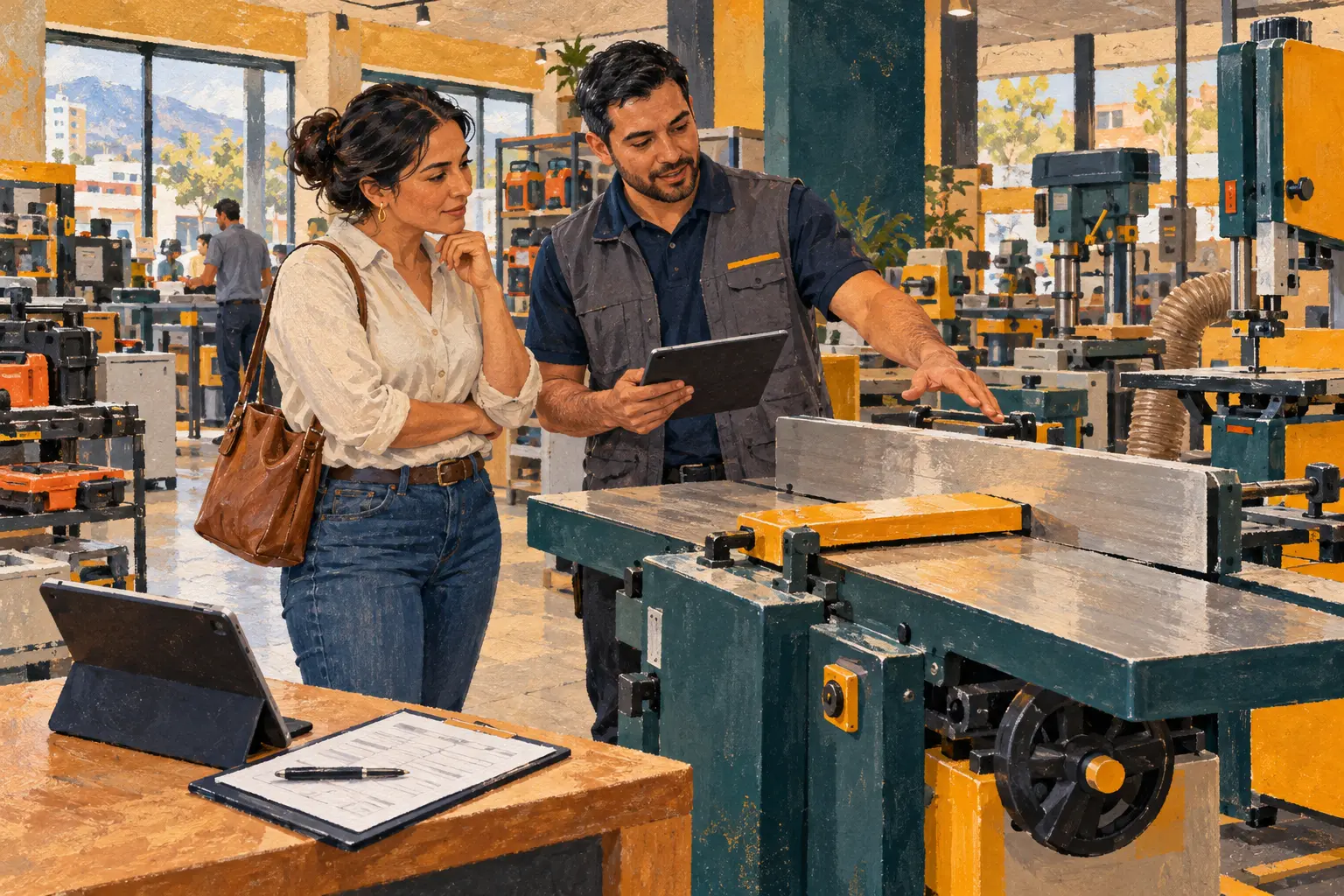
The arrangement involves a buyer, a seller and a financing provider. In an account published by Accion, investor Gabriel Isaza describes a network of more than 56 distributors. FinMaq assesses the application and pays the distributor directly: the financing remains tied to the intended equipment. The dealer can complete a sale without taking on the role of lender.
Assessment uses proprietary risk models and digital customer onboarding. The sources mention credit, rent-to-own arrangements and hybrid solutions. These are not equivalent contracts: using an asset, owning it and being able to buy it later involve different commitments. The announcement does not make it possible to reconstruct the interest rates, fees, required guarantees and final terms for each arrangement.
For the customer, two decisions that often travel separately come closer together: which machine is needed and what payment is sustainable. This could remove an organisational step, but it does not make every offer a good one. A simpler process should also be judged by what it lets customers understand before signing, not just by how easily they can submit an application.
A useful machine does not repay itself
The potential benefit differs from a consumer purchase: the equipment becomes part of the business’s work. It could enable a particular operation, expand capacity or replace an unsuitable vehicle. These are possibilities tied to the actual activity, not results that necessarily follow financing. A machine can be technically suitable and still arrive at the wrong moment for demand at the shop or workshop.

The key, in our analysis, is the relationship between repayments and the money available after operating costs. Selling more does not mean keeping all the receipts: materials, energy and maintenance still have to be paid for. Without contractual terms and the business’s accounts, it is impossible to establish whether this model makes an investment worthwhile. An investor’s decision to fund FinMaq does not answer that question on the borrower’s behalf.
The distributor’s position also deserves attention. Bringing a sale and credit into the same process could make purchasing easier, but requires clarity about who recommends the machine and who decides on financing. The sources consulted do not document commission arrangements sufficiently to attribute specific incentives to sellers. We therefore cannot assume either neutrality or improper practices.
There is another test that the word digital does not resolve. A proprietary risk model could select applications that a traditional process cannot assess; public descriptions, however, do not reveal its criteria or selection errors. Knowing that an application passes through a screen is not enough to conclude that access is fairer. The useful comparison concerns who gets financed, on what terms and with what outcomes over time.
Customers reached and results to verify
According to the announcement, FinMaq has served more than 1,600 customers and disbursed over $100 million since 2019. These are cumulative financing amounts, not the company’s current valuation or a profit figure. CEO Diego Sanz de Santamaría now aims to expand operations: exceeding $200 million in disbursements and reaching more than 5,000 customers over the following eighteen months. These are targets, not milestones already achieved.

The press release also cites a survey by 60 Decibels: 72% of customers reportedly obtained this type of financing for the first time. It is an interesting signal because it concerns access, not merely service speed. FRONTIERA has not obtained the full report with its sample and methodology. The figure should therefore be read as a result reported by the sources, not as proof that anyone previously excluded will receive credit or work more productively.
Reports by Contxto and IBTimes Colombia confirm the transaction and describe the model, but largely draw on information in the announcement. Having more publishers is not the same as having more independent measurements. Assessing growth will also require outcomes on repayments and costs borne by customers, not just new amounts financed.
The gap between choosing and being able to buy
The sources do not establish that FinMaq offers its services in Italy. The Colombian case is nevertheless relevant to small-business owners: it shows that access to equipment also depends on how its sale is organised. The innovation here is bringing distribution and credit assessment together, not presenting debt as a shortcut to success.
The next development to watch is specific: whether the network can reach more businesses while keeping terms understandable and repayments sustainable. The funding round finances FinMaq’s expansion. For the customer, however, the result begins after delivery: when the machine starts working and the first repayment falls due.