 Italiano
 English
Twenty years to reach a sketch
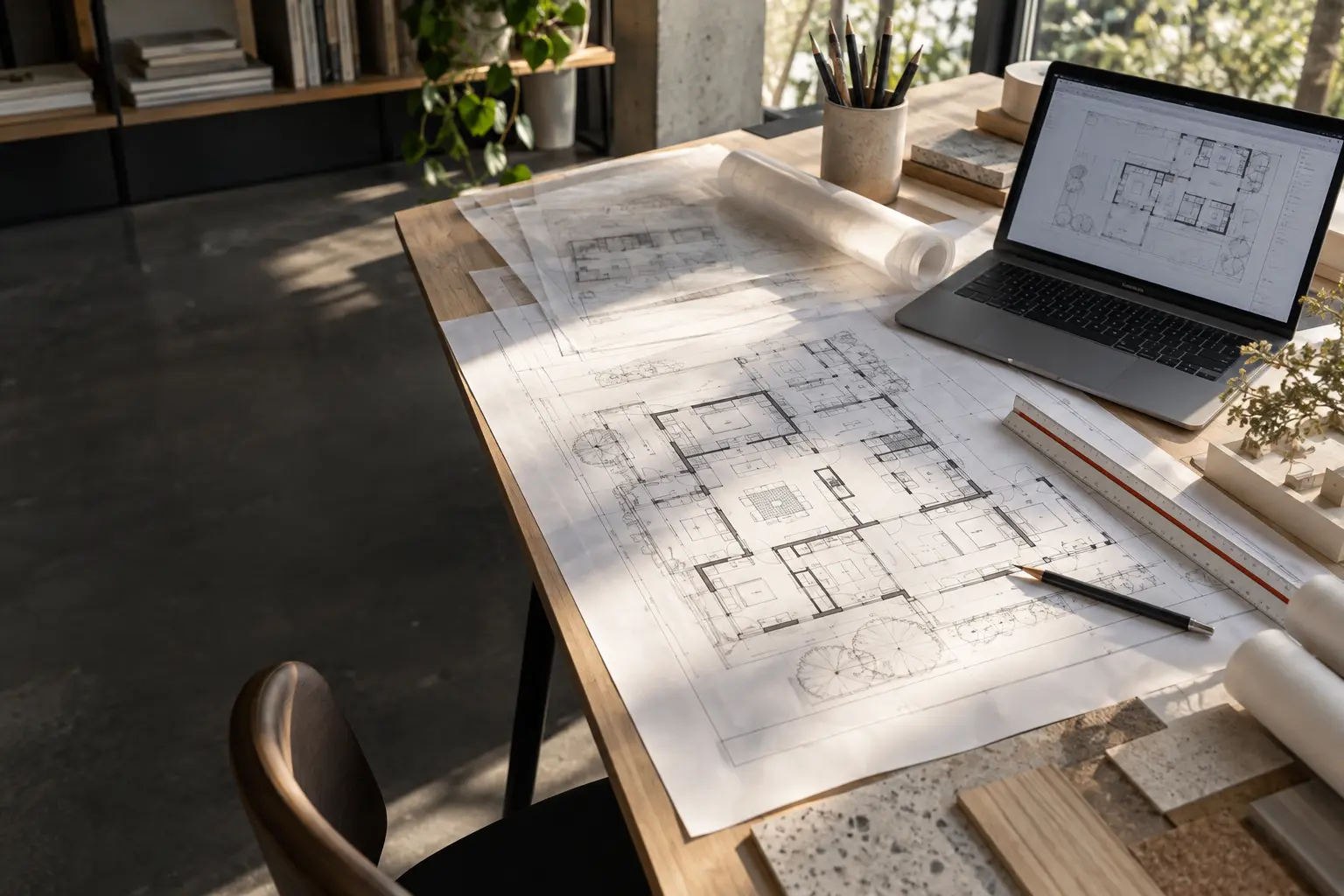
Almost twenty years ago, Al Dram, then an architecture student, devoted his thesis to software capable of generating design documents for a school. The idea stalled because the necessary tools did not exist. After generative AI arrived, Dram returned to it from a very practical starting point: the documents a firm must produce, coordinate, correct and ultimately submit to obtain a building permit.
On October 12, TechCrunch reported on the second version of Blueprints AI, the startup founded in Santa Monica by Dram and data scientist Coco Cao. The service starts from a description, sketch or PDF and prepares architectural, structural and building-services drawings. When one element changes, the system updates the rest of the document set and checks the design against the local codes available to it. This is a company claim, not proof that every authority will accept the result without corrections.
The product is not the drawing
The difficult part is not drawing a wall on a screen. A construction document set must reconcile structure, electrical systems, ventilation, plumbing, fire safety, accessibility and planning rules. An apparently small change can run through many drawings. If the files do not remain consistent, the error emerges during the authority's review or, worse, on the construction site.

Blueprints AI therefore sells coordination. The company says it trained its models on eight years of approved documents produced by Dram's firm. According to TechCrunch, the first version costs between $3,200 and $8,500 per month; larger organizations receive custom pricing. Its target customers are architecture and engineering firms, design-build contractors, developers and property owners. Buyers are not paying for a pretty image: they are paying for fewer hours of repetitive drafting and faster review.
It is a new business because it turns accumulated professional knowledge into a recurring service. Scale no longer depends only on the number of drafters hired: the same system can prepare more document sets while people focus on exceptions and decisions. But that leverage works only if review does not become the bottleneck the software promised to remove.
What happens after the click
The workflow described by the company has four steps that are understandable even to people who do not use design software. The initial material is uploaded; the system builds out each discipline; every change propagates through the linked drawings; finally, a professional reviews the document set and signs it where required. The claimed speed concerns production of the coordinated draft. It does not automatically include surveys, client decisions, discussions with authorities or all the changes that can arise during construction.
Research published in Buildings in September helps explain the limit. Digital permit checks must translate regulatory text, model data and local rules into traceable tests. It is not enough to ask a language model whether a building 'looks compliant.' Critical aspects require deterministic rules, precise references and the ability to reconstruct why a check passed or failed.
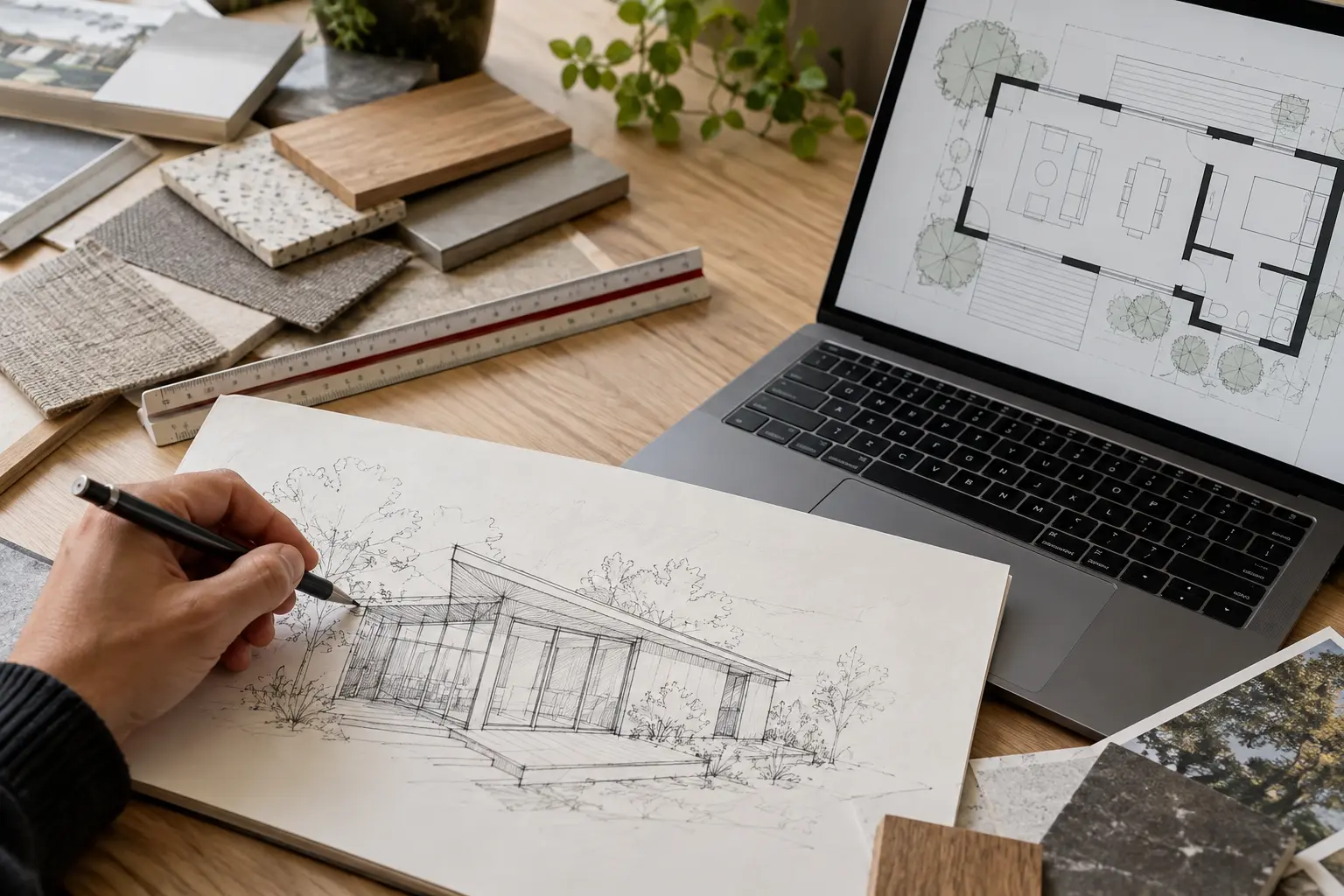
Blueprints AI says it checks international and local standards, but actual coverage varies from one jurisdiction to another. One authority may require forms, calculations or interpretations different from its neighbor. The term 'permit-ready' describes a document set prepared for review and submission; it does not mean a permit has already been granted.
The signature cannot be automated
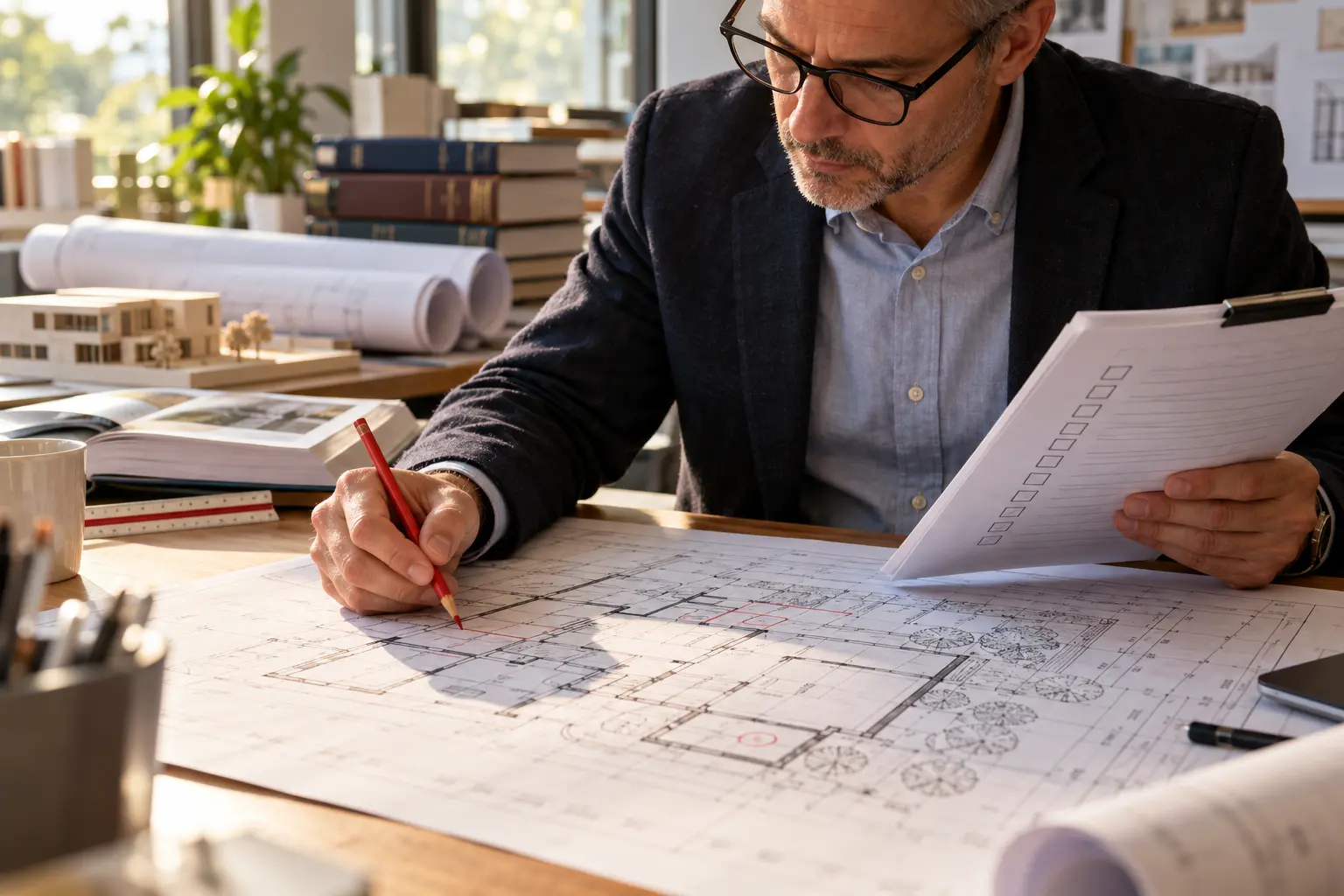
Dram and Cao say the product does not replace licensed architects. Documents must be reviewed and signed by professionals. This distinction is crucial: an error generated in a few minutes does not become less serious because it was produced quickly. Responsibility remains attached to the person who takes control of the design and submits it.
The American Institute of Architects notes that drawings and documents carry legal and professional weight. AI can reduce administrative and repetitive tasks, but contextual judgment, client relationships, coordination of decisions and responsibility for the outcome still belong to the profession. For a firm, savings therefore do not mean eliminating review; they mean focusing review on the points that genuinely require experience.
This also changes training. Many young professionals learn by reading and correcting drawings before taking on greater responsibility. If entry-level work is automated, firms will need to build another path for teaching people to recognize inconsistencies and poor solutions. Reducing drafting hours without developing review skills may produce professionals who are asked to sign what they understand less well.
Who may save time, and who risks losing it
For a small firm, a subscription costing thousands of dollars a month makes sense only if it replaces enough billable hours or allows the firm to handle more projects. For a property developer, the promise is to reach the cost estimate and permit application sooner. For a contractor, coordinated drawings may reduce requests for clarification and conflicts between disciplines. These are opportunities, not outcomes independently measured in the sources reviewed.
The economic risk is merely shifting the cost. If the output requires many corrections, time saved in production reappears in review. If a code is out of date, a perfectly formatted drawing may contain a wrong decision. And if every firm entrusts its models to a vendor, data ownership, project confidentiality and the ability to recover work in interoperable formats become important.
The signal to watch is not how many drawings the system generates in a minute. It is how many reach signature with few changes, how many pass the authority's review and how many errors are found before construction begins. Without those numbers, speed remains a demonstration; with them, it can become productivity.
The new profession behind the permit
Blueprints AI makes visible a change that was hidden inside design firms: value is shifting from drawing every line to defining constraints, checking relationships and taking responsibility for the whole. This does not mean drawing disappears. It means that part of the work becomes an industrialized service, sold by subscription and powered by archives of projects.
For the client, the promise is simple: less waiting before finding out whether an idea can become a building. For the professional, the choice is more demanding: use automation without confusing a complete drawing set with a correct design. The point to watch in the coming months will be the first group of document sets submitted to authorities. The real product will not be what comes out of the computer, but what an architect can review, sign and defend.