 Italiano
 English
The job exists, but the pathway breaks
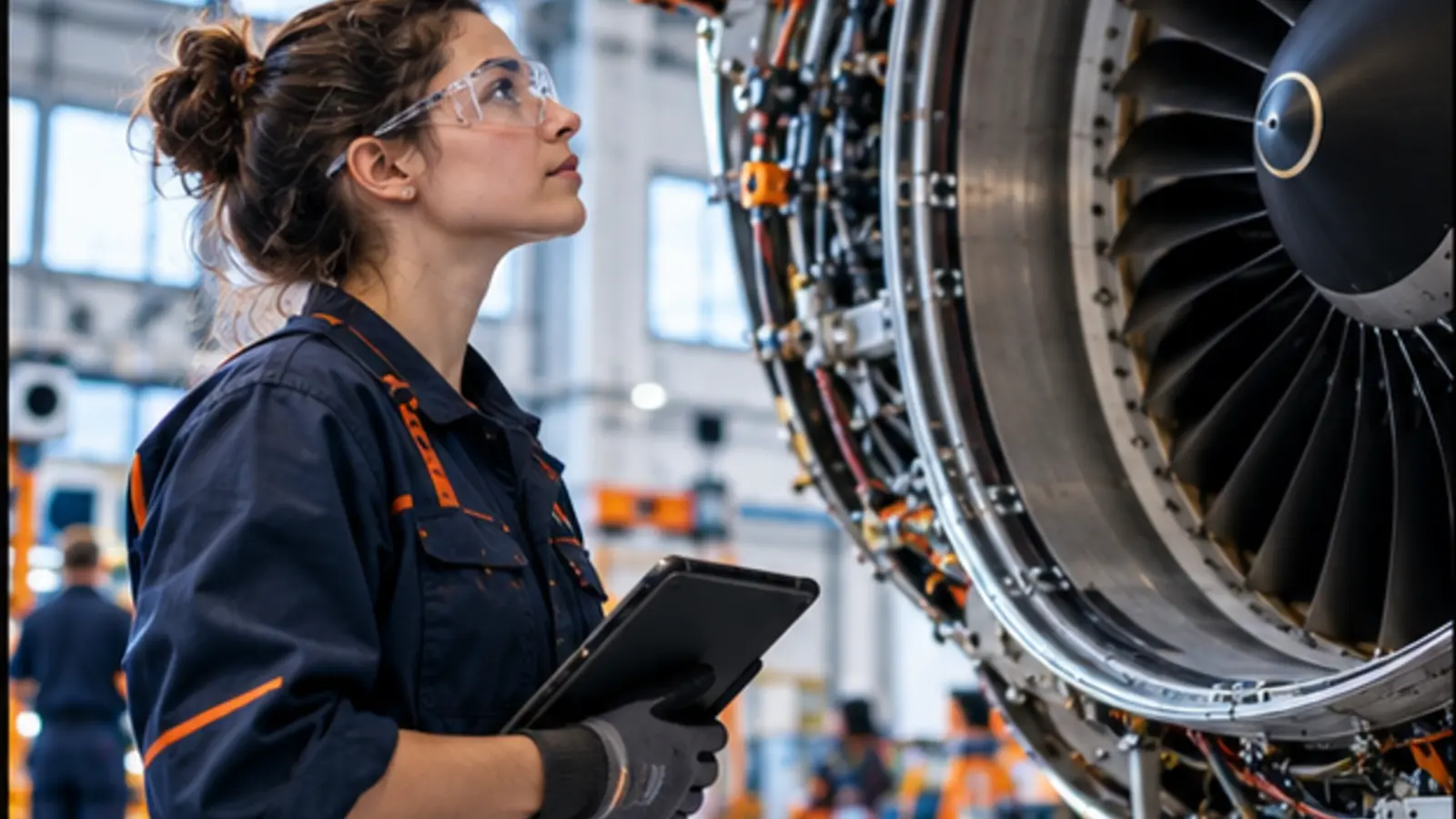
At some American high schools, students can learn to dismantle an aircraft component, read a technical manual and accumulate hours toward a mechanic's license. Then comes the step that separates interest from a profession. The Government Accountability Office listened to graduates of these programs: not all can take the full set of exams while at school, and many must pay for additional classes at a certified college. Students in a non-certified program need still more training before they can sit the tests.
This is where the major opportunity announced by Airbus on October 14 meets real life. The manufacturer estimates that by 2045 aviation will need 730,000 new maintenance technicians, 660,000 pilots and 1.05 million cabin crew members — 2.44 million people in total. But a demand forecast does not award a qualification: between a young person and the hangar lie tuition, laboratories, instructors, practical experience and certifications.
Why maintenance is becoming a market
Airbus does not present those figures as a social initiative. It places them within a commercial transformation. The global aviation services market — maintenance, parts, operational support, training, data and connectivity — is expected to exceed $420 billion in 2045, twice its 2026 value. The projected fleet rises to 45,550 aircraft and passenger numbers to ten billion. More aircraft and more flights mean more inspections, repairs and components to track for decades.
Reuters notes that Airbus wants to increase commercial aviation services revenue to more than $10 billion by 2030, from about €5.4 billion in 2025. The old narrative, commercial aircraft CEO Lars Wagner said, was to deliver aircraft; the new one includes services. This is a corporate statement and a revenue strategy, not a guarantee that every projected job will materialize. Boeing, however, reaches a very similar estimate: 728,000 maintenance technicians in its 2026–2045 outlook.
The reason is not simply that aircraft are aging. New-generation engines have required more frequent workshop visits than expected, and hundreds of aircraft have been grounded. When repair capacity is missing, an aircraft that has already been paid for cannot produce flights. The technician is therefore not a peripheral cost: the role becomes part of the capacity an airline can actually sell.
School is the first hangar
The GAO report, published in September, examined certified and non-certified schools, associations, a manufacturer and a maintenance company. The distinction matters. In the United States, FAA certification allows a school to link its program to the exams required to work on airframes and powerplants. A high school can teach a great deal and still fail to take every student all the way to both ratings. Six stakeholders identified the cost of certified training as a barrier.
Aviation Week describes the other half of the problem. Enrollment is rising; at WSU Tech, aviation maintenance has become the largest program, but demand has exceeded the available places. Expanding the pipeline requires space, equipment and instructors who know the work. Some partnerships bring students into companies during the summer and can lead to employment; camps for girls, visible women instructors and programs for people leaving the armed forces broaden the pool.
Filling classrooms is not enough. In its 2026 report, the Aviation Technician Education Council found that only 62% of available seats in U.S. programs were occupied, despite record growth in new certificates. Empty capacity in one area and a waiting list in another can coexist. Distance, cost, information and scheduling determine who can actually enter.
A regulated occupation for a good reason
Reducing barriers does not mean lowering the standard. A maintenance technician signs off work that affects flight safety. They must follow documentation, tolerance limits and traceable procedures; they must know when to stop and request a second inspection. Practical training is not a bureaucratic ritual that can be compressed until it disappears.
Technology changes what must be learned. Digital diagnostics, sensors and data analysis can indicate where to look for a fault, but someone must interpret the signal, inspect the component and document the decision. Airbus considers data and connectivity the fastest-growing services segment. The mechanic of the future does not replace a wrench with a tablet: they must master both.
This creates room for new activities less visible than an airline. Schools, simulators, shared laboratories, mentoring, teaching tools and pathways that recognize existing skills are needed. Recruitment and support services can emerge, but their value should be measured by how many students complete certification and remain in the industry, not by how many people a campaign reaches.
The decisive question: who pays for the bridge
The industry has an interest in training more people, but the initial risk often falls on the candidate. In 2026, the FAA allocated $26 million to programs for pilots and technicians, including career guidance and recruitment. It is a concrete public intervention; it does not yet show which pathways will produce more licenses or lasting jobs.
Companies can shorten the distance with apprenticeships, scholarships and paid work during training. Schools can build agreements that share equipment and instructors. Regulators can clarify which school credits count toward exams without turning recognition into a shortcut. Each solution shifts costs and responsibilities: that is why it must be followed through to hiring, not merely to the ribbon-cutting.
For a young person considering the occupation, the figure of 730,000 is encouraging but incomplete. The useful questions are local: how much does the pathway cost, which exams does it prepare students for, how many practical hours does it offer, which companies does it work with, and how many graduates actually work in maintenance? These are also the questions that distinguish an industrial need from an accessible opportunity.
The future of aviation is not just a new aircraft
Airbus sells aircraft and services, so it has an interest in describing a large market. Boeing is a competitor with a similar interest. The convergence of their forecasts makes the direction more credible; it does not turn it into certainty. Traffic growth, retirements, workshop productivity and component life can all change the need.
The most important signal is already visible: schools, companies and regulators are trying to build a pipeline while workshops and courses run into capacity limits. The frontier is not about inventing an unknown occupation. It is about making an old job accessible as it becomes more digital, more necessary and harder to improvise.
If the bridge works, we will see it in less spectacular but more useful figures: students admitted, certifications completed, first jobs, and retention after three years. An aircraft can remain in service for decades. The real opportunity is to ensure that, throughout that time, someone is prepared to determine when it can fly again.