 Italiano
 English
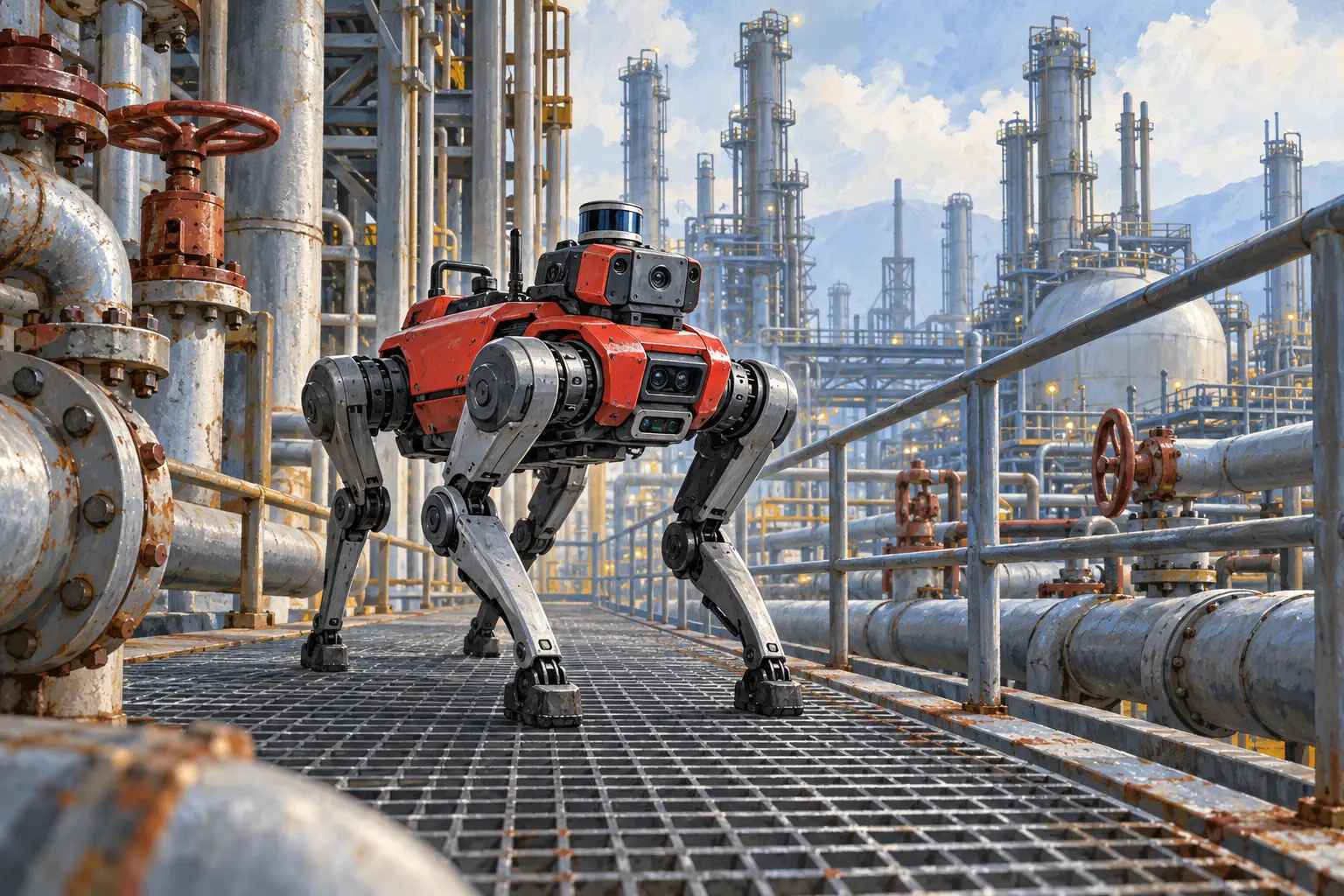
The breakthrough is being allowed in
The robot can make rounds where even a spark would be a problem. On October 27, ANYbotics announced that it had started shipping ANYmal X, a quadruped for inspecting oil, gas and chemical plants, naming Equinor and DSM-Firmenich among the recipients. The promise concerns the people who currently walk through those areas to check instruments: collecting data without having to enter in person every time. It does not mean sending a machine into any hazardous atmosphere. Its use has a specific scope.
SiliconANGLE, which covered the announcement, highlights the obstacle: a mobile machine contains electronics, surfaces that heat up and electrical connections. In the presence of flammable gases, the device used to look for a fault must not itself become an ignition source. The challenge is therefore not just making four legs walk well.
The project is designed to automate a specific task, not replace all the work in a plant. This is a useful distinction when assessing a purchase: rounds performed without people can reduce exposure, while diagnosis and any repairs remain separate problems. The result to watch is how much dangerous work is actually avoided, not how much the robot resembles an animal.
Before it measures anything, it must not ignite anything
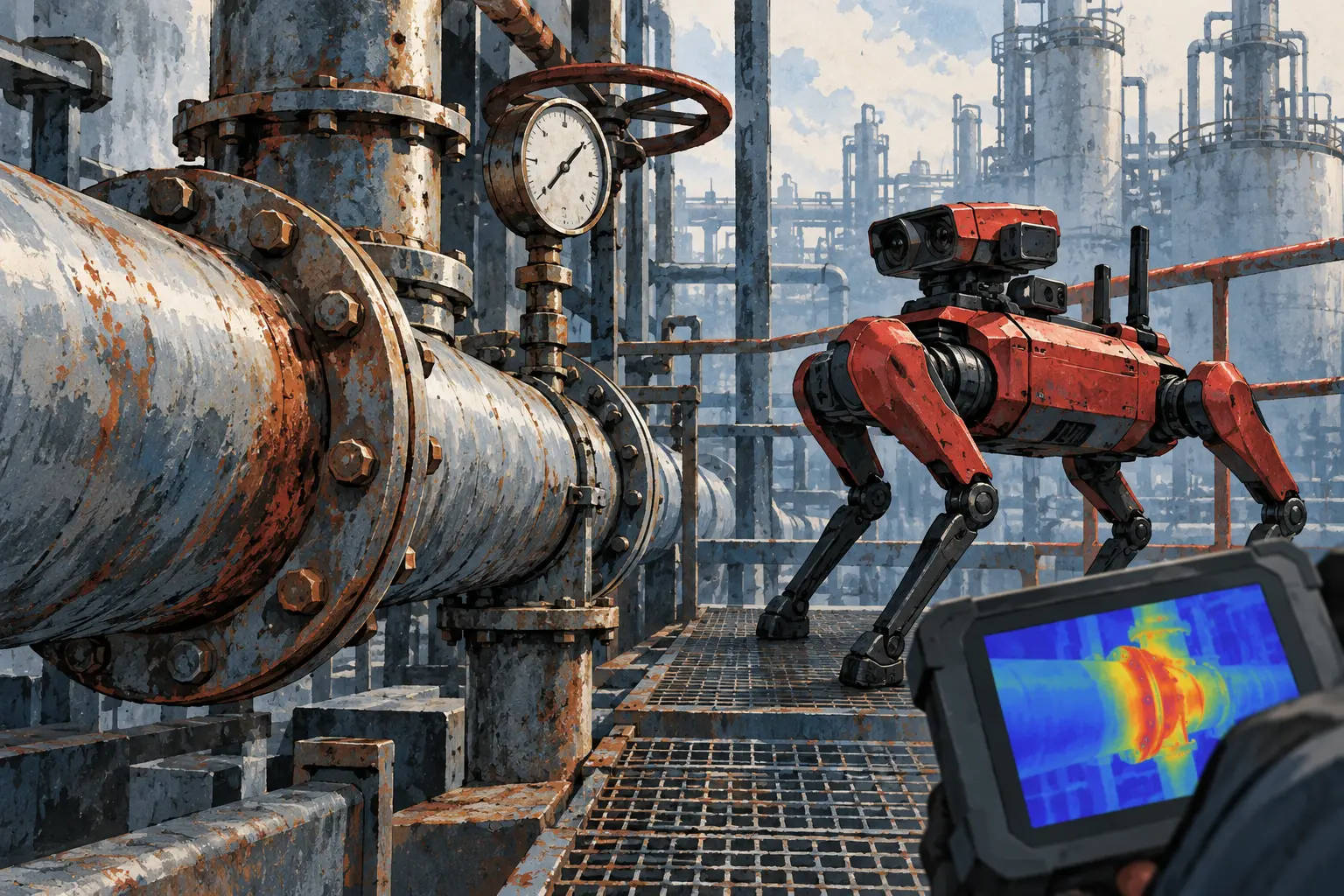
ANYbotics describes protection built around potential ignition sources. Computers and instruments are housed in sealed, nitrogen-filled chambers; the battery and leg actuators have flameproof enclosures. Automatic controls monitor temperatures. These are safeguards described by the manufacturer: they do not authorize use of the robot beyond the conditions specified for an individual plant.
The specifications describe an ATEX type examination performed by Bureau Veritas for Zones 1 and 2, gas group IIB and temperature class T4. They exclude Zone 0, explosive dusts and IIC gases such as hydrogen and acetylene. The FAQ also specifies that IECEx still requires a production-line audit. Presenting all these acronyms as certifications already equivalent would erase an important difference.
For an industrial buyer, that difference comes before the price. Product documentation, authorized conditions and the classification of the intended work area must be compared. Greater autonomy does not, on its own, expand the scope of use. The right commercial question becomes: which routes in my factory can this unit cover, and with which exclusions? A successful demonstration on a similar walkway is not enough.
A measurement must know which machine it belongs to
Cameras, thermal imaging and acoustic sensing collect signals along the route; gas measurement requires an optional module. The robot returns to recharge outside the hazardous area, where nitrogen replenishment also takes place. These details are less striking than the legs, but determine which checks are available and where to organize the service.
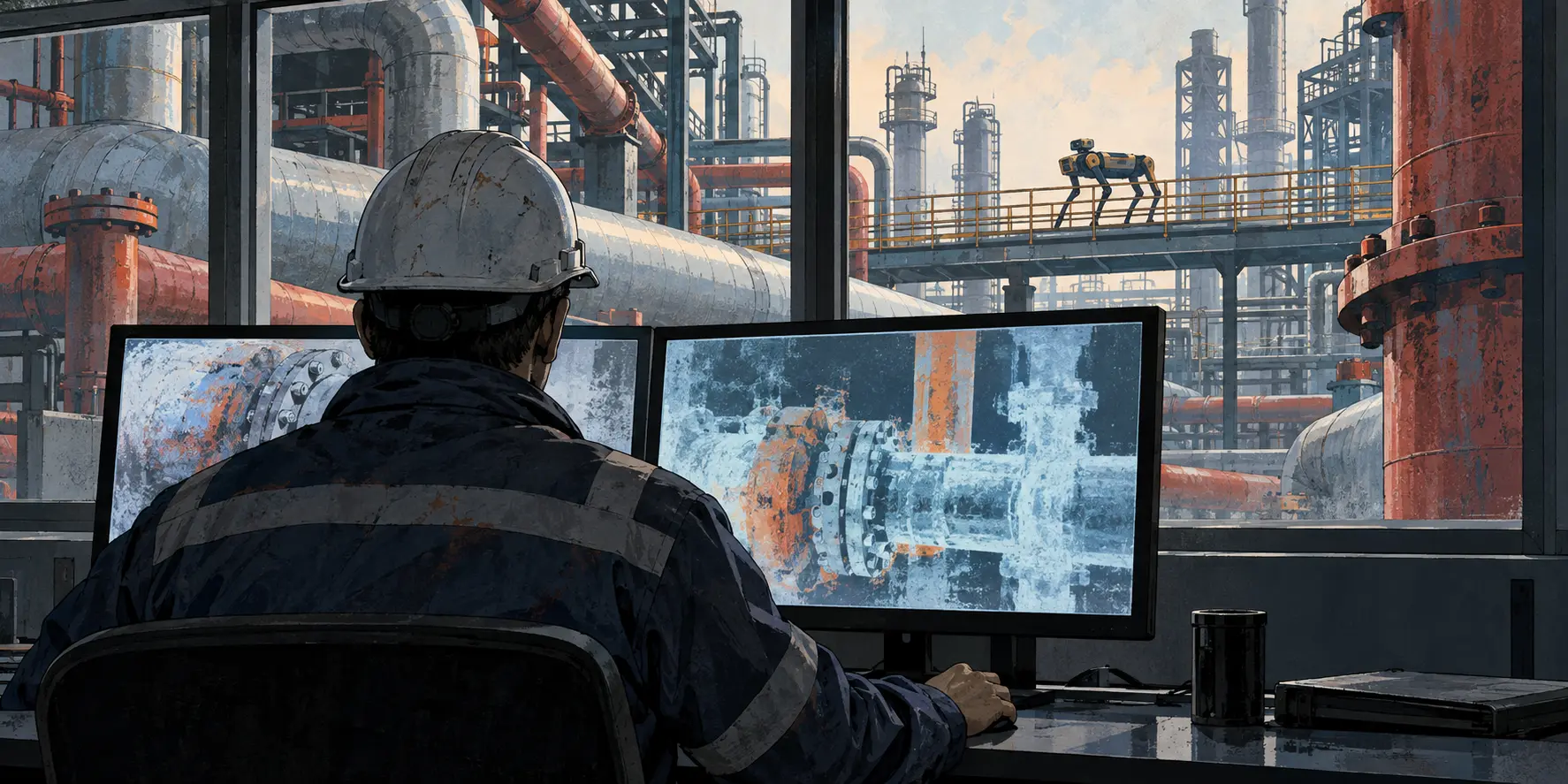
The connection with everyday work runs through Shift, ANYbotics’ platform. According to the documentation, each reading is associated with the equipment, its location and its history. The system schedules missions, compares results and transfers anomalies to maintenance software. Planned integrations include SAP and IBM Maximo. Buyers are therefore also purchasing a data-management chain, not just a mobile machine.
This is where an interesting image differs from usable information. Knowing that something looks hot is of little use without the identity of the component, the operating context or a comparison with previous checks. For someone preparing an intervention, the quality of the record may matter more than the number of photographs. This connection, which must be tested on site, is what makes the industrial value of automated inspection plausible.
The maintenance technician does not disappear from the route
Shift also provides remote assistance when the machine encounters an exception. The platform can receive requests from plant systems and return results with the evidence collected. ANYbotics describes an integrated offering of robots, mission management and connections to work orders. This is the visible business model: serving plant operators throughout the inspection process. The sources reviewed do not publish a price for ANYmal X.
The general ANYmal adoption process includes operator training, route configuration and field support. The company also proposes simulating missions using building models before the machine arrives. These are not guaranteed timelines for every ANYmal X installation. They do, however, indicate activities to include in the project: preparing plant information, checking observation points and training the people who will handle exceptions. The cost of adoption does not necessarily match the robot’s invoice.
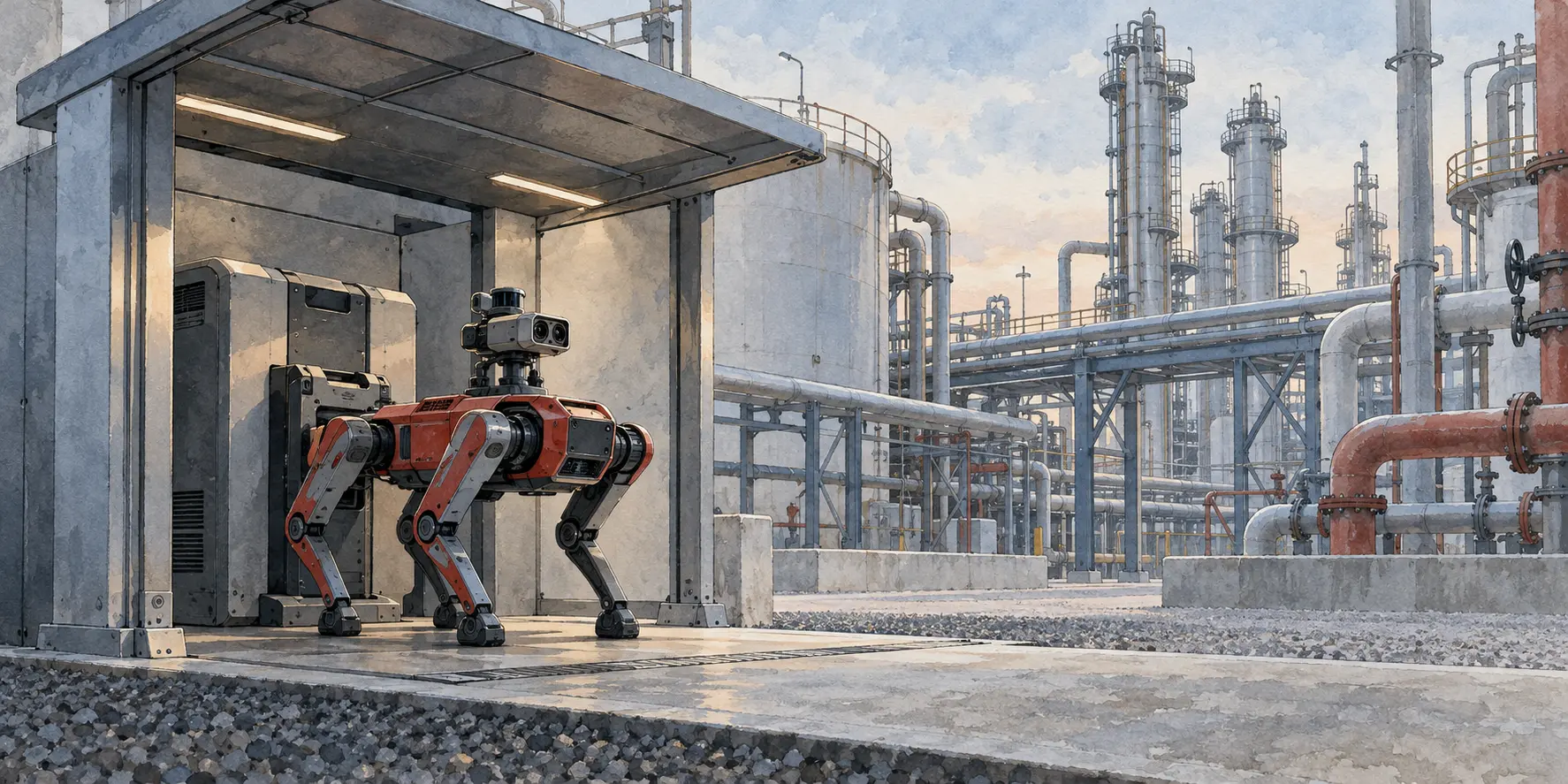
For the maintenance team, the possible change is a shift from some repetitive readings to checking signals and preparing interventions. This requires organizational choices: who assesses an anomaly, who can request an additional check, and who decides that a measurement is insufficient? These are questions to resolve during adoption, not capabilities to attribute automatically to artificial intelligence.
An alert can arrive more often without becoming more useful. If alarms have no recipient or lead to unnecessary checks, work is shifted rather than eliminated. Conversely, well-documented evidence can help prepare a technician’s entry. These are possible consequences of the model, not measured results from the new deliveries: there is not enough public data to quantify them.
Deliveries are not yet proof of safety
The company reports trials that began in 2023 with energy and chemical groups. It also cites more than 120,000 monthly inspections through its system: that figure concerns the broader platform, not a fleet of newly delivered ANYmal X robots. It must not be turned into proof that this model has already achieved the same results. Delivery quantities, prices and an independent assessment of the effect on accidents are missing.
The decisive test will be less spectacular than the launch: routes covered regularly, reliable measurements, exceptions handled and human entries actually avoided. For plant managers, these are the elements against which to compare cost and usefulness. For the people working there, the boundary remains concrete: the robot can go and read an instrument; someone still has to decide what to do with that reading.